The first step toward better security for your home is to go outside and think like a burglar who is motivated and focused on getting into your residence. What are the first considerations you notice?
Is there a particular side or spot that would provide “ground cover” from anyone seeing intruders? Are there any broken windows or missing screens that would create easier entries? Are there any items sitting around that could be used as tools for breaking into your home, such as screwdrivers or hammers? Did you leave any clues about perhaps not being home, such as stacked up newspapers, overflowing mailboxes or delivery packages? How many parts of your home, if any, are completely blocked from the view of passersby?
Then, examine the landscape and perimeter of your residence at different times of the day to identify potential security hazards, such as previously inconspicuous dark areas or deep shadows. If you know any police officers, ask them if they conduct free home safety inspections to identify areas on which you should focus.
Some people also like to place barriers, such as privacy fences, large rocks or rows of dense shrubs, around their residences for added measure.
According to FBI statistics, a burglary occurs somewhere in the United States every 18.2 seconds. Following are security recommendations for home exteriors to help avoid being one of the residences invaded.
- Eliminate Hidey-Holes
Be sure landscaping doesn’t provide convenient hiding spots for would-be intruders. Trim large bushes and trees that obscure entrances to your home, and consider minimizing or eliminating shrubbery around your home’s boundary, if really worried about having the monitoring assistance of neighbors. If something needs to be planted near windows or doors, add thorny or spiked plants to act as burglar deterrents.
- Light Up The Night
Outdoor security lighting offers a layer of protection, compared to a house that’s completely dark during evenings, because there is greater risk of prowlers being seen and caught. When planning outdoor lighting, however, be cautious not to over-illuminate and thus draw unwanted attention to valuable items.
Motion-sensor flood lights are a good way to go for yards, patios, corners, decks or pool areas. Roadway luminaries help with driveways and parking areas. Mounted lights near door entrances are a must. Landscape luminaries can help around sidewalks, flower beds, walkways, trees, bushes or trails. Many lights available are now solar charged. Lastly, motion-sensor recessed lights can help remaining areas.
Good lighting dissuades criminals because they don’t want to be seen or identified. Security expert witness Chris McGoey indicates exterior lighting needs to bright enough for people to at least view 100-feet around them.
- Deadbolt Doors
Did you know national figures indicate 34 percent of intruders enter through front doors and another 22 percent enter through back doors? In addition, one-third of burglars don’t even have to force their entries into homes. Be sure to keep doors locked, and to install quality deadbolts on all doors. Crime prevention experts recommend installing a single cylinder, deadbolt lock with a 1-inch throw.
Then use deadbolts at all times, even when you’re home.
Additionally, be sure locks are firmly screwed into solid wood, not just into a light door jamb. The longer the screws and the longer the bolt, the safer your home will be.
For maximum security, all doors should be windowless. And other house windows shouldn’t be close enough to doors so that thieves easily could break windows and unlock doors from the inside.
- Make Garage Doors Monitor Safety
Our company’s Smart Garage Door technology gives customers the ability to remotely know a door’s status, as well as to access and close it from anywhere via smartphones. Users always have real-time visibility to their doors, and will receive notifications if their garage door is left open. Citywide Alarm customers also can customize notifications, including when a dog walker arrives, or a no-show alert if kids don’t get home by a certain time, for example.
- Become Your Own “Peeping Tom”
Install a peep hole in your front door at least. A 220-degree wide-angle viewer enables you to find out who is outside without opening your door to a possibly dangerous stranger.
- Secure Sliding Doors
Sliding glass doors are special security challenges because they can be forced open sideways or simply popped out of the track. If you have sliding doors in your home, place wooden rods or wedging bars in the track frames. Supplemental locks provide a little more protection.
- Lock Windows
It’s easy to forget to check if windows are locked back up, and windows typically have latches rather than locks, making them easier to pry open. Upper floor windows become attractive if they can be accessed from a stairway, tree, fence or by climbing on balconies.
Our customers also can get our Security Window Film applied to help impede break-ins. The 3M Window Films help hold glass fragments together, causing it to take another 90 seconds longer to begin to break through glass, which burglars know would slow them down.
- Curtail With Curtains
Experienced burglars like to “case” a home before they break in. One of the easiest things you can do to make your home less burglar-friendly is to install curtains, blinds or shutters, and then be sure to close them when you’re not there. Thieves who can’t see into homes are more likely to move on to the next potential victim.
Moreover, don’t leave small, expensive items that easily can be converted to cash in plain view of windows.
- Don’t Broadcast Your Identity
Make it harder for prowlers to case your home by avoiding names on mailboxes or on doors. Displaying names makes it easier for burglars to look up your number and call to see if anyone’s home.
- Reward Your Dogs for Barking
Dogs don’t have to be ferocious or huge to deter intruders. Burglars admit to looking for no-dog residences because they are easier and quieter pickings.
- Install An Alarm System
Protecting homes and families from criminal intrusion is high on most people’s list of priorities. Contrary to belief, the majority of home and apartment burglaries occur during the daytime when most people are away at work or school.
Based on a University of North Carolina Department of Criminal Justice and Criminology report, about 60 percent of convicted burglars stated the presence of security systems influenced their decision to target other homes.
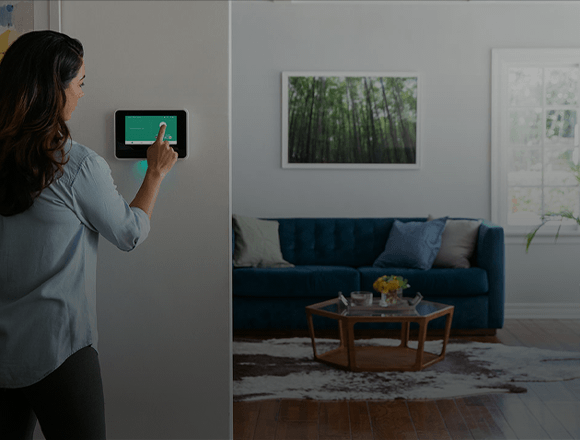
We can assist you with installing a Video Doorbell and Smart Door Locks so you can be aware of visitors at your door through your smartphone. With two-way communication, you can see, hear and speak to visitors no matter where you are physically. The motion sensor function provides alerts even without visitors pressing a button, and you can “View Live” through a camera at any time with the smartphone app. Paired with Citywide Alarms Smart Door Locks, you can get more protection, complete with full-color night vision.
-
- Safeguard Keys
Rather than hiding keys outside, consider allowing a neighbor to have the extra key. Experienced burglars know to look for hidden keys in planter boxes, under doormats and above ledges. Requiring service vendors to see your neighbor to retrieve and return your house key sends the message that someone is watching.
Burglars generally follow a selection process: Choose unoccupied homes with the easiest access, the greatest amount of cover, and with the best escape routes. By taking the steps we’ve outlined here, you’re making your home “unattractive” to potential burglars. Other good security practices are to display highly visible alarm decals, beware of dog stickers and neighborhood block watch signs, making sure these warnings are visible from every approach to your residence, not just from the front entrance.