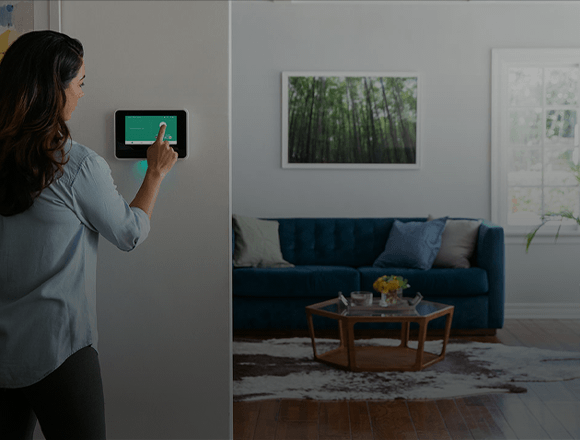
Home automation is a surging trend in home security. Automated features provide homeowners many new, everyday options for operating a variety of systems in houses, such as the vital aspect of lighting.
While home security systems with home automation options can monitor and manage thermostats, activate humidity controls and interact with certain appliances or entertainment centers, they also can activate or deactivate specific electrical outlets and lights. Imagine the convenience of turning on lights within a dark house on your way home because a meeting or sporting event ran later than expected? Also envision being able to turn off certain lights that were accidentally left on when leaving for extended periods of time or long trips, or being able to support a family member with entering a safer home as they arrive ahead of you.
What does “smart lighting” entail? Basically, it’s an intelligent network that incorporates communication between various system inputs and outputs to control lighting through one or more central computing devices, such as computer tablets or smart cell phones. Lighting control systems now can place both indoor and outdoor lighting where and when it’s specifically desired in residential, commercial and industrial spaces. You can control your home remotely with just a few screen taps!
Lighting control systems maximize energy savings, satisfy building codes, and comply with green building and energy conservation programs. In fact, some homeowners program their lights to never go above 75 percent and use dimmers to rack up significant savings on their electric bills. Controlling and dimming lights also extends the life of light bulbs, thus saving money for the long haul. In fact, some industry standards indicate a single bulb can last 2.28 years when dimmed at 50 percent, which is 20 times longer than the average light bulb lifespan.
One of the best security benefits of smart lighting is achieving that “lived in look.” A clear-cut signal to would-be burglars that you’re completely away from home is a non-lit house seen several days in a row. Perpetrators take dark houses as invitations to break in. Timers alone often aren’t enough to simulate a lived-in look, because they turn on and off the same lights at the same time every day. A smart home system can be set up to vary the operation of lights or even make them random, to make it appear someone is moving around adjusting the lights.
Outdoor lights, with programmed schedules and motion sensors, also can be great crime deterrents.
Another security benefit from automating home lighting is when it’s integrated with an overall security system. When a security window sensor detects a forced entry, smart programming can turn on the house lights, direct a security camera to start recording and send an alert to your mobile phone.
Some integrated lighting control systems provide an astronomical time clock that always knows when its sunrise and sunset, so your landscape lights always know when to turn on and off.
There’s also the convenience of being able to control the lighting for those times that neighbors are stopping by your home to check in or when house sitters stay all night.
Lighting control systems fall into two main categories: whole house or single room. A whole-house lighting control system is designed to command lights throughout an entire home, including outdoor areas. A whole-house lighting control system is useful in any home, and is a great type of system for homes with an open floor plan or for families that use the entire house when entertaining.
A single-room system is designed specifically to arrange the lights within one room. Most people choose a single-room system when they want to improve the eye appeal or add visual impact to one special room of the house, such as a home theater, an art gallery or an elegant sitting room.
Homeowners with on-the-go lifestyles now have many home security system options from which to choose to help make their homes safer and to run them more efficiently — all with greater peace of mind. Being able to control your lights through your phone is a small step toward a full smart home, and it’s one that can be enjoyed on a daily basis.